
Jovan Hutton Pulitzer
Politics • Education • Science & Tech
Corroborating the Biblical Record
The Monumental Structure and Cultic Finds at Biblical Shiloh
post photo preview

The Monumental Structure and Cultic Finds at Biblical Shiloh: Corroborating the Biblical Record

Biblical Shiloh stands as one of the most pivotal sites in early Israelite history. According to the biblical narrative, after the Israelites entered Canaan under Joshua, “the whole congregation of the people of Israel assembled at Shiloh and set up the tent of meeting there” (Joshua 18:1). For more than three centuries, through the period of the Judges and into the early monarchy, Shiloh served as the central sanctuary of Israel. The Ark of the Covenant resided there. Annual festivals drew the tribes. Eli the priest ministered there, and the young Samuel grew up in its service (1 Samuel 1–4). The site remained the spiritual heart of the nation until the Ark was captured by the Philistines in battle (1 Samuel 4), after which Shiloh’s prominence faded and Jerusalem eventually took its place.

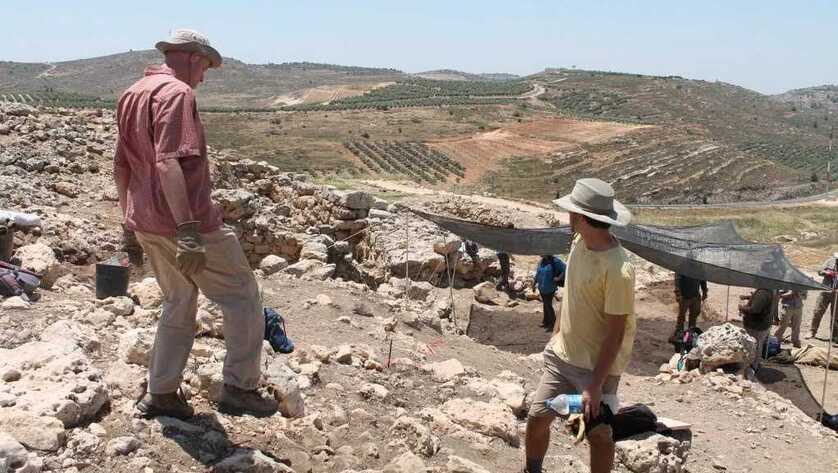
Excavations conducted by the Associates for Biblical Research (ABR), directed by Dr. Scott Stripling, have focused on the northern end of the ancient tell. Over eight seasons, culminating in the 2026 campaign, the team has uncovered a monumental east-west oriented structure whose proportions, orientation, and associated artifacts align in striking ways with the biblical description of the Tabernacle and its cultic practices. These finds do not recover the Ark itself, nor do they constitute absolute scientific “proof” of every theological claim. They do, however, provide substantial material corroboration for the historical reality of a major Israelite cultic center at Shiloh during the period described in Joshua and 1 Samuel, and they match specific details of the sacrificial system and priestly symbolism recorded in the Torah.

The Monumental Building and Tabernacle Proportions

The most significant architectural development of the 2026 season was the discovery of the southern wall of a large monumental building. With this wall identified, excavators can now reconstruct the structure’s full footprint. The building orients east to west and exhibits proportions similar to those given for the biblical Tabernacle in Exodus 26:15–25 and 27:13. The Tabernacle’s overall dimensions formed a rectangular courtyard roughly twice as long as it was wide, with an internal division separating the Holy Place from the Most Holy Place (Holy of Holies). Ancient Jewish tradition preserved in later writings suggests that at some stage the Israelites erected stone walls and placed the tent structure over them. The ABR team has noted that the newly clarified dimensions and the presence of a thick internal wall in a location consistent with the veil that divided the two chambers strengthen the possibility that this is the footprint of the sanctuary complex that stood at Shiloh.
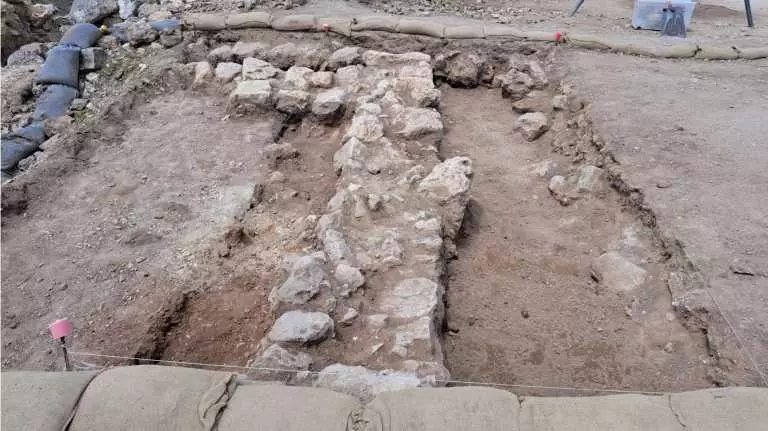
The structure dates primarily to Iron Age I (roughly 1177–980 BCE in the conventional chronology used by the excavators), the period corresponding to the late Judges and the time of Eli and Samuel. Storage rooms associated with the building further support a functioning sanctuary complex rather than an ordinary domestic or administrative structure. The east-west orientation itself is significant: the Tabernacle was designed so that worshipers approached from the east, facing west toward the Holy of Holies, a orientation later retained in the Temple in Jerusalem.

Cultic Artifacts: Pomegranates, Altar Horns, and Tekhelet Dye

Surrounding and within the monumental structure, excavators recovered a suite of objects directly linked to Israelite cultic practice and priestly symbolism.

Ceramic pomegranates have been found in multiple seasons. The pomegranate was a prominent motif in the Tabernacle and later Temple. Exodus 28:33–34 instructs that the hem of the high priest’s robe be decorated with alternating golden bells and pomegranates of blue, purple, and scarlet yarn. Pomegranates also appear on the capitals of the Temple pillars (1 Kings 7:18, 42). The discovery of miniature ceramic pomegranates near the monumental building, including examples recovered through careful wet-sifting, places this symbolic object precisely where a sanctuary would be expected. One particularly well-preserved example even retained a small hook, suggesting it may have been suspended as a decorative or ritual item.

Stone altar horns have likewise been recovered. Biblical altars were required to have horns on their four corners (Exodus 27:2; 38:2; Leviticus 4:7, 18, 25, 30, 34). Grasping the horns of the altar was an act of seeking asylum (1 Kings 1:50; 2:28). The presence of multiple altar horns in the vicinity of the monumental structure points to sacrificial activity of the kind prescribed in the Torah. At least three such horns have been identified over the course of the excavations, some found in secondary use in later walls, indicating the reuse of sacred architectural elements after the sanctuary’s decline.

Perhaps most distinctive are the murex shells. The murex snail was the ancient source of the costly blue-purple dye known as tekhelet. Exodus 25–28 repeatedly specifies blue, purple, and scarlet yarns for the Tabernacle curtains, the veil, and the high priest’s garments, including the ephod, breastpiece, and the blue robe. The discovery of murex shells in and around the monumental building supplies a tangible link to the production or use of the very dye commanded for priestly vestments. Finding these shells at a site identified as Israel’s early sanctuary is difficult to dismiss as coincidence.
The Bone Deposits and the Levitical Sacrificial System

One of the most compelling bodies of evidence comes from the large deposits of animal bones recovered in Area D, interpreted as a favissa, a sacred dump for discarded remains of sacrificial offerings. Over successive seasons the team has excavated tens of thousands of bones and bone fragments (reports cite figures ranging from more than 10,000 in recent work to cumulative totals exceeding 100,000 across the broader project). The assemblage is dominated by sheep, goats, and cattle—the very animals prescribed for sacrifice in Leviticus. Pig bones are virtually absent, consistent with Israelite dietary and sacrificial restrictions.

Osteological analysis reveals two further details that match the biblical text with precision. First, many of the animals were slaughtered at a young age, before full maturity, aligning with the requirement that sacrificial animals be without blemish and of appropriate age (Leviticus 22:19–25). Second, bones from the right side of the animals significantly outnumber those from the left. Leviticus 7:32–34 explicitly reserves “the right thigh” (or right shoulder) of the peace offerings as the priestly portion: “And the right thigh you shall give to the priest as a contribution from the sacrifice of your peace offerings.” The statistical predominance of right-sided bones in the Shiloh deposits is a detail too specific to be easily explained by ordinary domestic refuse. It constitutes strong material evidence that the sacrificial system described in Leviticus was practiced at this site.

Gate Complex, Earlier Layers, and Continuity

Additional walls uncovered in 2026 clarified a bent-axis gate complex with multiple rooms on the northern side of the site. Bent-axis gates were a known architectural feature in the ancient Near East and would have controlled access to the sacred precinct. The presence of such a carefully planned defensive and access system is consistent with a major cultic and administrative center.

Beneath the Israelite levels, excavators encountered earlier Canaanite remains, including three large Middle Bronze Age storage jars (pithoi) containing charred olives and wheat. These jars, found under collapsed fortification debris, illuminate the pre-Israelite occupation of the site. The biblical narrative itself acknowledges that Shiloh was already a significant place when the Israelites arrived (Joshua 18). The stratigraphic sequence, Canaanite occupation followed by a major Iron Age I cultic complex, matches the historical transition described in the books of Joshua and Judges.

Historical Implications

Taken together, the monumental building’s orientation and proportions, the ceramic pomegranates, the altar horns, the murex shells, the right-sided sacrificial bone deposits, and the gate complex form a coherent archaeological picture. They are consistent with the biblical portrayal of Shiloh as the long-term home of the Tabernacle and the center of Israel’s sacrificial worship for centuries after the Conquest. The finds align with specific textual details in Exodus (construction and priestly garments), Leviticus (sacrificial portions and animals), Joshua (establishment of the sanctuary), and 1 Samuel (the period of Eli and Samuel).

Archaeology rarely delivers “smoking-gun” proof of every narrative detail. The Tabernacle was, by design, a portable tent structure, and organic materials rarely survive. Yet the cumulative weight of architectural form, symbolic artifacts, and sacrificial remains at the precise site named in Scripture for this purpose significantly strengthens the historical reliability of the biblical account. The 2026 discoveries, by completing the southern wall of the monumental structure, have allowed researchers to evaluate the building’s function with greater clarity than ever before. Far from being a later legendary invention, the cultic center at Shiloh appears to have been a real and enduring institution whose material traces continue to emerge from the ground.


 

community logo
Join the Jovan Hutton Pulitzer Community
To read more articles like this, sign up and join my community today
1
What else you may like…
Videos
Podcasts
Posts
Articles
Clip 2 from today

CLIP #2 from today - this may help you understand the election con that went on better. For your discernment. https://rumble.com/v7d1k48-discernment-part-2-flipping-votes-or-flipping-obvious-fact-vs-fiction.html

00:00:59
37,000 unknown log-ings

OVER 37,000 anonymous logins to election date sever? What does this mean? From today's program: CLIP #1 - full program at: https://rumble.com/v7d1k48-discernment-part-2-flipping-votes-or-flipping-obvious-fact-vs-fiction.html

00:00:39
BlindFaith my new book dropping soon!

#BlindFaith my new book dropping soon!

00:02:56
THE GREAT DELUGE SERIES

Before the empires of Babylon and Assyria rose to power, before kings carved their boasts into stone, there was Mesopotamia — the ancient “land between the rivers,” cradled by the Tigris and Euphrates, a vast and fertile world that gave birth to some of humanity’s earliest cities, laws, temples, and written records. In its greatest geographic sense, Mesopotamia was not merely one small country of the ancient world, but a broad and living region stretching across the heart of what is now modern Iraq, while also reaching into northeastern Syria, southeastern Turkey, parts of western Iran, and even the northern edge of Kuwait.
Enjoy this one.

THE GREAT DELUGE SERIES
NEW SERIES DEBUT

The Great Deluge Stories: THE GREAT DELUGE SERIES w/ JovanHuttonPulitzer The Greek Retelling

NEW SERIES DEBUT
THE GLARING TRUTH IN RECAP OF 2024 ALONE!

#BidensBullshitInReview

THE GLARING TRUTH IN RECAP OF 2024 ALONE!
post photo preview
11-year-Old Butchers His Whole Family Because Parents Took Away His Mobile Phone!
Are Parents and Grandparents Killing Their Children's Future Without Knowing It?

That Type Of News Headline Is Occurring Weekly! Which I Why I Wrote My Newest Book!

The Precious Glow

The Miller house used to fill with the sounds of childhood at dinnertime, laughter, the scrape of chairs, stories tumbling over one another. Now the only consistent sound was the soft vibration of a phone against wood. Twelve-year-old Sophia Miller kept hers on her lap, thumb moving even as her mother passed the mashed potatoes. “Phone away, Soph,” her father said, the same weary request he made every night. She sighed, set the device face-down, and the family ate in a silence that felt heavier than any argument.

Two years earlier the phone had arrived as a safety tool. Sophia was ten. All her friends already carried them. Her parents, Karen and Mark, told themselves it was practical—coordinating pickup, texting if plans changed. They installed controls and promised limits. The first cracks appeared quickly. A dance video app led to another, then another. The upgrade to a full smartphone with its front-facing camera turned ordinary moments into performances. Every outfit, every expression, every feeling became potential content. The “like” button became a daily report card on her worth.

Sophia’s days changed shape. She once spent afternoons building forts in the woods behind their subdivision or losing herself in thick chapter books. Now she moved from school to her bedroom, the only light the rectangle in her hands. She stayed up chasing streaks and comments, the blue light from the screen suppressing melatonin and pushing bedtime later and later. Mornings turned into battles against exhaustion and irritability. Her once-solid grades slid. Teachers noted she seemed distracted, unable to stay with a task for more than a few minutes without her eyes drifting toward her desk.

The social world shifted too. Sophia still saw friends at school, but conversations were punctuated by glances at screens. A group chat turned cruel one afternoon when an edited photo of her in a swimsuit circulated with mocking captions. Nearly half of American teens experience some form of cyberbullying, and the sting landed hard. She withdrew further. At the same time the endless scroll showed her curated versions of other girls’ lives, flawless skin, exciting vacations, constant validation. The gap between her real, messy self and those highlight reels grew wider every day. She began to dread mirrors and group photos. Anxiety that had been occasional became a steady companion


.


Her parents watched the transformation with growing alarm. The vibrant girl who once organized neighborhood games now preferred the glow of her room. She grew defensive when asked to put the phone down, sometimes lashing out with a sharpness that felt foreign. One evening Mark half-jokingly called the device her “precious” after they had watched an old movie together. Sophia didn’t laugh. She clutched it tighter.

What the Millers were witnessing in their own home was playing out across thousands of others. Large-scale research has tracked how addictive patterns—not just total hours, but the compulsive pull, the distress when separated, the difficulty cutting back, take hold in early adolescence. A major 2025 study following thousands of U.S. youths found that roughly 31 percent showed an increasing addictive-use trajectory for social media and about 25 percent for mobile phones beginning around age eleven. Those high or rising addictive patterns were linked to two to three times higher risks of suicidal behaviors and ideation compared with low-addictive-use peers, along with elevated anxiety, depression, and behavioral symptoms. Total screen time alone did not predict the worst outcomes; the compulsive relationship with the device did.

The U.S. Surgeon General has warned that social media carries a profound risk of harm to developing minds, with adolescents using it more than three hours a day facing roughly double the risk of anxiety and depression symptoms. Constant comparison, exposure to idealized images, and the pressure to perform for an audience erode self-worth. For many boys the pathway runs through video games and online communities that reward aggression and endless escalation, pulling them away from face-to-face friendships and physical activity. For girls the algorithms often amplify social comparison, perfectionism, and relational aggression. Both paths replace the messy, resilient work of real-world play and unstructured time with a steady drip of engineered stimulation.

The night everything changed for the Millers, Sophia came home from school red-eyed and silent. A comment thread had turned vicious. After hours of scrolling and crying she finally admitted she had thought about hurting herself. The phone, meant to connect her, had become the place where she felt most alone and most judged.


Karen and Mark did what growing numbers of parents are doing. They treated the problem like the serious threat it was. They performed a full family media audit, removed social apps from Sophia’s device, and established firm tech-free zones, no phones at meals, in bedrooms, or for the first hour after school. They moved bedtime earlier and banned screens in the hour before sleep. They replaced scrolling time with hikes, bike rides, board games, and long talks without devices on the table. They talked openly about how the platforms work, how algorithms are designed to keep eyes glued, how feeds are curated performances rather than reality. They modeled the same limits themselves.

The first weeks were difficult. Sophia was irritable, bored, and convinced she was missing everything important. Withdrawal felt real. But slowly the fog lifted. Sleep improved. Focus returned in school. She started meeting friends in person again and rediscovered the woods behind the house. The sharp edges softened. The family felt like a family again.

Sophia’s story is not rare. Across the country the same quiet replacement is happening: play-based childhood giving way to phone-based childhood. The result is measurable, rising anxiety and depression that accelerated sharply once smartphones and social platforms became nearly universal among teens around 2012–2015. Attention spans fragment under constant notifications. Resilience erodes when every moment of boredom is instantly soothed by a screen. Real relationships thin when face-to-face time is replaced by curated digital contact. The very capacities children need most, deep focus, emotional regulation, creativity, secure identity, are starved while the brain is still wiring itself.

This is not neutral technology. It is a system engineered for maximum engagement and profit, exploiting the developing brain’s vulnerabilities at the exact ages when identity, attention, and social skills are most plastic. The normalization of early and constant access has allowed the damage to spread with little pushback until recently.

The good news is that reversal is possible. Families that set clear boundaries, delay personal smartphones and social media, protect sleep and in-person time, and actively teach critical thinking about algorithms see measurable improvements. Communities, schools, and faith groups that support these choices multiply the effect. The work is not easy, but it is straightforward: choose presence over convenience, real experience over endless stimulation, and courage over complacency.


This is the battle described in The Gollum Effect. The book names the transformation clearly, the way children are being hollowed out by screens, algorithms, and the false promise of digital validation, and equips parents, educators, and communities with the understanding and practical strategies needed to fight back. It shows how to delay devices, create tech-free rhythms, prioritize outdoor adventure and real-world mastery, and model the presence our children desperately need. If the story of Sophia and families like hers feels familiar, the book offers both the diagnosis and the path forward. We do not have to watch the next generation be consumed. We can name the enemy, face it together, and reclaim what matters most. The time for complacency is over.

Read full Article
post photo preview
SpaceX IPO Red Flags: Why Pension Giants Are Worried — and Why Gold and Silver Still Matter
The SpaceX IPO Warning: Paper Ownership vs. Real Assets

The Pensions & Investments report centers on a major institutional-investor concern: SpaceX may be preparing to enter the public markets with one of the most powerful companies in the world, but with a governance structure that many long-term investors believe weakens ordinary shareholder rights from the beginning.

The issue is not whether SpaceX is an important company. It clearly is. The issue is whether pension funds, index investors, and public-market shareholders will be asked to buy into SpaceX while having little meaningful power over how the company is governed.

According to P&I, executives representing more than $1 trillion in pension fund assets had already written to SpaceX before the public filing, asking for a meeting over concerns tied to alleged governance terms described in leaked reports of a confidential SEC filing. Those concerns apparently were serious enough that major public pension representatives wanted direct engagement with the company before the IPO. But spokespeople for New York State pension funds and New York City said SpaceX had not responded.

That silence matters because pension funds are not short-term traders. They invest money on behalf of retirees, public employees, teachers, police officers, firefighters, and other long-term beneficiaries. Their concern is not only whether SpaceX can grow, but whether shareholders will have normal rights if something goes wrong. If public investors are given weak voting rights, limited accountability, or little influence over the board, then the stock may offer economic exposure without real ownership power.

SpaceX’s S-1 filing on May 20 made public the company’s intentions for an IPO later in the month on Nasdaq. That timing is also important because Nasdaq and other index providers have reportedly rewritten admission rules to bring mega-IPOs such as SpaceX and Anthropic into investor portfolios faster. This creates a second major red flag: institutions may not merely choose whether to buy SpaceX. Some may become forced buyers through passive equity funds and index-tracking strategies.

That is where the concern becomes systemic. If SpaceX is added quickly to major indexes, pension funds and passive funds may have to buy the stock even if their internal governance teams object. In other words, retirees could end up exposed to SpaceX not because a fiduciary actively concluded that the governance structure was acceptable, but because index rules pulled the stock into the portfolio automatically. This is a powerful example of how modern markets can transform a private company’s governance choices into a broad public-investor problem.

The report also highlights action from Denmark’s AkademikerPension, a $25 billion pension fund, which placed SpaceX on its exclusion list on June 1. The fund based that decision on both valuation concerns and worries about company management. CIO Anders Schelde’s statement was especially blunt: “if it were just about accountability, SpaceX would be excluded with a snap of the fingers due to the company’s disastrous governance.” That quote captures the institutional anxiety perfectly. The worry is not just price. It is structure, accountability, and the long-term ability of shareholders to discipline management.

Other U.S. pension funds told P&I they also had concerns about SpaceX’s governance, but they emphasized the difficult reality that they will likely still be forced buyers through passive equity funds. This is the contradiction at the center of the story. A fund may object to the company’s voting structure, worry about insider control, and question whether shareholders have adequate protections, yet still end up owning the stock because of index exposure.

P&I also reports that the Investor Coalition for Equal Votes and Railpen, a £34 billion U.K. pension fund, are examining SpaceX’s capital structure and voting rights. Caroline Escott of Railpen, who also chairs the Investor Coalition for Equal Votes, framed the issue as a long-term value problem. Her point is that voting rights are not a technical detail. They shape the discipline of the company. When accountability is diluted, management may have less pressure to allocate capital carefully, avoid conflicts, or listen to shareholders.

Over time, she argues, weak accountability can destroy value,  and the people who suffer are not only investors, but the ordinary savers whose retirement capital supports these companies.

That is the broader theme: SpaceX may be a world-changing company, but the IPO debate is not just about rockets, satellites, or Mars. It is about whether the public market is becoming a place where investors supply capital while founders and insiders retain nearly all control. For pension funds, that is a dangerous precedent. A company can be innovative and still have poor governance. A company can be strategically important and still be overvalued. A company can be loved by the market and still expose long-term savers to structural risk.

This is where the SpaceX governance issue ties directly into long-term investing in gold and silver. SpaceX represents the modern paper-asset model: future promises, founder control, index-driven buying, complex filings, voting structures, and dependence on management execution.

Gold and silver sit on the opposite side of that equation. They have no CEO, no board, no dual-class shares, no super-voting insiders, no dilution, and no governance trap.

That does not mean gold and silver replace ownership in great companies. But they serve a different role. They are hard assets outside the corporate-control system. When public markets increasingly ask investors to trust insiders, index committees, valuation models, and governance structures they cannot control, gold and silver become a long-term anchor. The SpaceX IPO story is therefore not just about one company. It is a warning about the growing gap between owning an asset and actually having control over it. Physical gold and silver remain valuable precisely because they remove that layer of trust. 

Do yourself and your future a favor and Request Your Free Gold & Silver Kit Today! from my partners at Goldco!

Read full Article
post photo preview
Do You Think Venezuela Stole The Elections? Consider This!

Venezula Stole The 2020 Elections!

That’s been the recent headlines and nonstop cavalcade of interviews with a wide variety of election experts, foreign country experts and paid pundits pushing out over the airways.

The use of the word “pushing” on my part is intentional? There are not many ways I can find where the United States can prosecute anyone individual or group of individuals for doing anything from Venezuela to America. Another point, even is the leader (or past leader) of Venezuela could be prosecuted over elections does that even incarcerate the actual companies or individuals who did it? Or does such even fix the United States elections? I think not!

For me, I think proving such a case with real prosecuatable evidence we be very hard if not impossible.


In an effort to understand if anything at all could be done to Venezuela over possible election I decided to dig deep and find out LEGALLY what could be done! For me, only hard evidence, which has been proven can change the nefarious nature of our US elections. This is why making sure we PROTECT the Full Forensic Audit Archives. Trust me - it is going to be needed after the midterms. Let’s look at the legal standards and what we can do:

Based on the circulating claims that - voting software with purported Venezuelan origins being used to influence U.S. elections, particularly the 2020 presidential race. These claims primarily involve companies like Smartmatic (founded by Venezuelans but U.S.-based) and Dominion Voting Systems (a separate Canadian-American firm), which some have falsely accused of using software designed to rig Venezuelan elections under Hugo Chávez and Nicolás Maduro, then applying it to “flip” U.S. votes. For instance, Smartmatic itself publicly accused the Maduro regime of tampering with turnout figures in Venezuela’s 2017 election (unrelated to U.S. systems), and both companies have won massive defamation settlements against media outlets promoting the claims, including Fox News’ $787 million payout to Dominion in 2023.


Addressing the “what if” scenario hypothetically which I seek answers for: If software originating from or tied to Venezuela were verifiably used in U.S. elections and believed to have impacted results (e.g., through manipulation, hacking, or undue influence), it would trigger a cascade of legal, investigative, and diplomatic responses under U.S. law. Voting systems are considered critical infrastructure, and foreign interference in elections is treated as a national security threat. Below, I’ll outline potential outcomes based on established legal frameworks, precedents, and how similar allegations have played out.

Immediate Investigative and Enforcement Actions

  • Federal Investigations: The Department of Justice (DOJ), FBI, and Cybersecurity and Infrastructure Security Agency (CISA) would launch probes. For example, in late 2025, Trump’s DOJ reportedly interviewed individuals pushing Venezuela-related 2020 claims as part of broader election inquiries, though no evidence emerged. If substantiated, this could escalate to grand jury indictments for foreign actors or U.S. enablers.

  • Election Audits and Recounts: States using the software would conduct forensic audits (as seen in Arizona’s 2021 Maricopa County review, which found no fraud). Federal oversight via the Election Assistance Commission could mandate nationwide reviews.

  • Civil Lawsuits: Affected parties (e.g., candidates or voters) could sue for damages under laws like the Voting Rights Act. Defamation suits have already arisen from baseless claims, costing broadcasters hundreds of millions.

Potential Crimes and Prosecutions

If proven, such interference could violate multiple U.S. statutes with extraterritorial reach, allowing prosecution even if acts occurred in Venezuela (as discussed in prior contexts like drug trafficking or terrorism ties). Offenders (e.g., Venezuelan officials, software developers, or complicit U.S. entities) could face charges if extradited or apprehended. Here’s a table of key offenses:


At first glance I personally don’t see in these citations above that actually put the real offenders in jail. Yes, there are ways to pressure countries and gain favors in exchange for “offenses”, but no one would really go to prison.

Thus my quesion: Who would actually go to Prison?

Lets continue:

Prosecutions would require a U.S. nexus (e.g., software used in American jurisdictions or affecting U.S. citizens). Extradition from Venezuela is unlikely without regime change, but individuals could be tried in absentia or seized (as with Maduro’s 2026 abduction and New York trial). International bodies like the Organization of American States might condemn it as electoral sabotage.

“might condemn it as electoral sabotage”

Look at that end result, “might condemn it as electoral sabotage”. Is that not the same thing as a strongly worded letter sent out by Republicans?


Share

With what you know thus far from legal review, what could actually happen if the “Venezuela conntection” was proven?

  • Diplomatic Fallout: Heightened sanctions, asset seizures, or military posturing. Post-2026 Maduro capture, some theorists linked U.S. actions in Venezuela to “uncovering” election tech ties, though officials denied it as a motive. Could strain U.S.-Venezuela relations further, potentially leading to asylum claims or defections revealing evidence.

  • Election Reforms: Congress might pass laws banning foreign-owned voting tech (e.g., proposals post-2006 Smartmatic scrutiny). Increased paper ballot mandates or blockchain verification.

  • Public Trust Erosion: Even unproven claims fuel distrust, as seen in 2020-2026 revivals, leading to violence (e.g., Jan. 6) or suppressed turnout. Ironically, Venezuelan elections themselves have faced real fraud accusations under Maduro, with international observers decrying manipulation in 2018, 2024, and 2025 polls.

  • Cybersecurity Implications: DHS would classify it as a cyber attack, prompting defenses against similar threats from adversaries like Russia or China.

For me, I don’t see how ANY of these things FIX our elections and NOTICE public trust erosion has already happened!


When I step back and look at this “Venezuela Did It!” I see another “psychological operation” in play! It’s being broadcast, pushed, promoted and pontificated and the system knows it may not have any real teeth. So, what is the plan?

To placate the American public that something is being done when what the system really wants is the broken system to still be used to control us, place nefarious actors in elected positions and they enable the raping of the system and us!

WHAT SAY YOU?

FOR ME, in the end we 100% need hard physical proof of what happened RIGHT HERE IN THE UNITED STATES by the bad actors here. That is why protecting our Full Forensic Audit Archives is so mission critical! Without hard provable evidence NOTHING WILL CHANGE.

With that said WE NEED YOUR HELP. I predict the midterms are going to be a disaster. Then it will be more than a year of legal battles while Trump is still in office. We cannot ride out the financial delta between now and when this critical information will be needed by the Administration and the United States citizens. Will you help us protect this? Any amount will help, please help!

Read full Article
See More
Available on mobile and TV devices
google store google store app store app store
google store google store app tv store app tv store amazon store amazon store roku store roku store
Powered by Locals