
Jovan Hutton Pulitzer
Politics • Education • Science & Tech
TOTALLY DISGUSTED WITH THE GOP and ELECTION INTEGRITY
Part Of The UniParty Plan In Action
August 21, 2023
post photo preview

This afternoon I participated in a call which was supposed to be about "Election Integrity'.

To me, and maybe I am wrong on this one, but Election Integrity is working to fix what we most assuredly know is broken. Our elections.  The opening speaker, after rattling off great sounding but useless credentials that any academic would ejaculate over, proceeded to express that Google changed” 450,000 votes in the 2020 election.

With an opener like that – as he pointed to numerous articles and his peer reviewed work – you think “Wow we have a true academic on our side!”  Problem was, the report as with its thesis and findings was – not that 450,000 votes were changed (as he clearly said several times) but they were really voters who were on the fence and thus when Goggle manipulated search engines data, they then voted for Biden.  He was asserting that Google made you voter a certain way. I say, if Google swayed your vote, then you ARE the weakest mind in the room!

He was literally saying the 2020 and 2022 election was legitimate, but Google manipulated the search engine rankings.  Or, in other words Biden really won.

To boot, as if taking a hint from the recent “The Plan” Summit, he stated all he needed was $50m to complete the project, just get on his “list” so he can email you the fantastic investment details.  He told everyone he had already had $3m funded in but he is running out of money, but he could get it done for just $47 million dollars more.

Didn’t we just sit through two days of “The Plan” to hear a non-starter and to be told “But we are going public to raise $30m”.  Where does that money come from? American voters who care, just like you.

Seems like the system is in high gear now. It only asked the public for $80m this last week and then it will all be solved!

MOVING ON!

Yours truly was the next speaker.  As you would expect, I called this Google “changed the votes” out asap and then went on did my presentation and I talked about these misdirection plans and how we keep getting pitched “after the fact” solutions versus “get our asses in gear now solutions”.  Finished my talk, yes were direct, hard and impassioned and then listened to the other speakers.

During the other speakers this “Academic” (who by the way instructed the host to make sure he was referred to as Dr. Epstein) posted “see this is the type of conspiracy I told you Republicans are falling for”.  He was speaking about me showing where the maladministration was. To him it was just “conspiracy”.

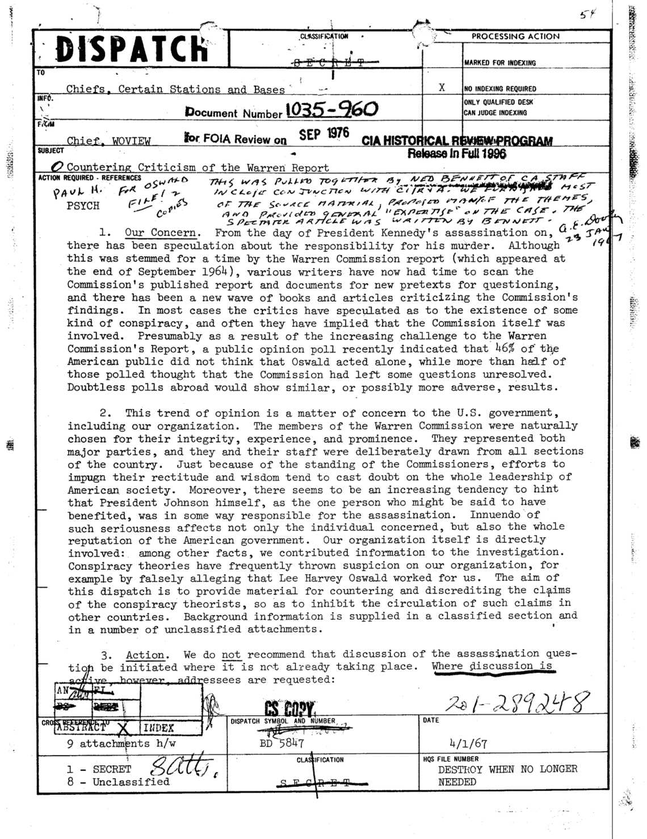
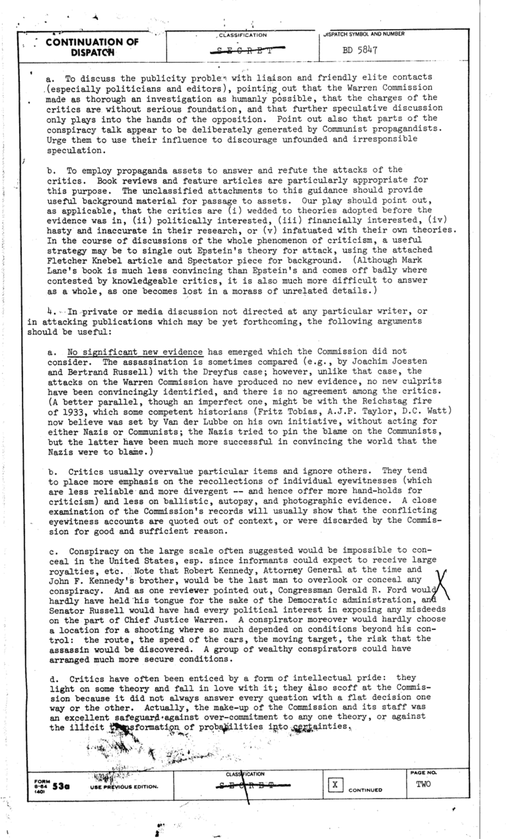
NOTE: Ever been called a “conspiracy theorist”? Ever wonder where that term came from? In 1976 the New York Times obtained a document they requested via the Freedom of Information Act. The discovered ocument was a C.I.A. Dispatch labeled “psych” for “psychological operations” that was distributed in 1967, indicating they coined the phrase “conspiracy theory” and “conspiracy theorists” to attack anyone who challenged the official narrative from the Warren Commission.
Thus, I raised my hand to ask questions – as normal – then came my term (after folks asked me questions) and I called out the good Dr and told him his statement in chat he posted about this being conspiracy was “horseshit”.  He then advised me I must speak in non-vulgar terms (or some junk) in order to talk with him. So, I course corrected and said “this is fucking horseshit”. 

I did get a chance to get him to admit he KNEW there was NO FRAUD in the 2020 or 2022 elections and the courts had proven so and all the adults across the Unites States (he cited 48 risk limited audits – you know how effective those are!).

As you can imagine, when that came out – that he did not believe there was any fraud, maladministration in the elections and all of our were conspiracy theorists, you can imagine I was ready for the autopsy to begin, which would have been very valuable for everyone to hear play out, but alas the “host” who introduces each speaker immediately hit mute button and said – “no one on this call is to be challenged” – and that was it.

I can be challenged on ANYTHING and any of my team’s work.  And I expect IF I cannot defend the work to be called out! I have ZERO FEAR being questioned or challenged.

THAT WAS IT IN MANY WAYS!

That friend, who introduced the speakers (and arranged for the speakers) instantly terminated our association forever. Why? Was it not just keeping the peace?

No and here is why!

Where else have you heard “no one is to challenge anyone here”?

In Arizona and that was what the Arizona Senate did when Liz Harris spoke up and exposed the real estate boondoggle underbelly.  In fact, they not only attacked her for having the testicles to address it, but they BOOTED her from the Legislature.   They said the fact she had a speaker who shared “information of questionable real estate practices among lawmakers was false and scandalous and way off base.”  NOTE: It was so-off-base they wrote a law really quick and passed it that no political real estate records could be made public (wonder why?)

MY ISSUE:  The moment I heard “no speaker can be challenged” I knew this was, yet another GOP repeat of classic infiltration and shutting down being questioned.

My goal is simple – provide total truth and transparency in all we learn to help clean up our broken elections.

This call was supposedly a peer-to-peer call and peers can call each other out and disagree. It’s peers! That specifically means “the adults are in the room and if you have a challenge you speak up and work it out” not shut it down.

I wondered why so many on the calls were the very same people who raised $20m in the name of Election Integrity in 2020 yest did nothing and then came out and said, “no election fraud happened”.  It is clear now – crystal clear to me. No matter where we turn the GOP has its fingers in the mix and introduces their experts.  It is the way this game is played.

I also think it is misleading to have what looks like 4 different organizations on speaking about Election Integrity (but because no one really digs deep) and yet they do not know (or intentionally tell you) that all 4 organizations are tied together as sister companies all driven by the very same GOP operatives.

I guess, they don’t want to hurt anyone’s feelings letting you know – but they are willing to let 1500 Election Integrity “grassroots folks talk and spill their guts” while the Gop operatives listen in.

Bottom line: This is the most disgusting crap I have ever had to deal with – ever! Other than election audits, of course.

What say you?

community logo
Join the Jovan Hutton Pulitzer Community
To read more articles like this, sign up and join my community today
54
What else you may like…
Videos
Podcasts
Posts
Articles
SaveTheChildren

So much is at stake and it's happening because WE ALLOWED IT! #SaveTheChildren https://www.amazon.com/Gollum-Effect-Precious-Pixels-Devices/dp/B0H7HJDZF1

00:01:59
Clip 2 from today

CLIP #2 from today - this may help you understand the election con that went on better. For your discernment. https://rumble.com/v7d1k48-discernment-part-2-flipping-votes-or-flipping-obvious-fact-vs-fiction.html

00:00:59
37,000 unknown log-ings

OVER 37,000 anonymous logins to election date sever? What does this mean? From today's program: CLIP #1 - full program at: https://rumble.com/v7d1k48-discernment-part-2-flipping-votes-or-flipping-obvious-fact-vs-fiction.html

00:00:39
THE GREAT DELUGE SERIES

Before the empires of Babylon and Assyria rose to power, before kings carved their boasts into stone, there was Mesopotamia — the ancient “land between the rivers,” cradled by the Tigris and Euphrates, a vast and fertile world that gave birth to some of humanity’s earliest cities, laws, temples, and written records. In its greatest geographic sense, Mesopotamia was not merely one small country of the ancient world, but a broad and living region stretching across the heart of what is now modern Iraq, while also reaching into northeastern Syria, southeastern Turkey, parts of western Iran, and even the northern edge of Kuwait.
Enjoy this one.

THE GREAT DELUGE SERIES
NEW SERIES DEBUT

The Great Deluge Stories: THE GREAT DELUGE SERIES w/ JovanHuttonPulitzer The Greek Retelling

NEW SERIES DEBUT
THE GLARING TRUTH IN RECAP OF 2024 ALONE!

#BidensBullshitInReview

THE GLARING TRUTH IN RECAP OF 2024 ALONE!
post photo preview
Man Convicted Of Starting One Ff California’s Worst Wildfires
The numbers, 429,603 acres, 709 structures destroyed, thousands evacuated

The numbers, 429,603 acres, 709 structures destroyed, thousands evacuated, only begin to capture the scale of loss.

On a scorching July afternoon in 2024, Upper Bidwell Park east of Chico, California, offered its usual summer escape. Temperatures soared past 100 degrees under a National Weather Service red-flag warning. Low humidity, strong winds, and bone-dry vegetation created perfect conditions for disaster. Swimmers gathered at popular spots like Bear Hole and Alligator Hole along Big Chico Creek, seeking relief in the water amid the oak-studded hills and brushy ravines.

Among them was Ronnie Dean Stout II, a 42-year-old Chico resident with a long criminal history. Witnesses later described him as heavily intoxicated. He had purchased malt liquor that morning and spent time at Bear Hole, where he harassed bathers with insulting comments. Then he climbed into his mother’s 2007 Toyota Yaris and drove west along the gravel Upper Park Road toward town.

His driving was reckless. Witnesses reported speeds of 30 to 50 miles per hour on the rough surface. Near Alligator Hole, the small car slid off the road and high-centered on a dirt berm or mound of earth roughly 60 feet above a steep, brush-filled gully. Dry grass and vegetation surrounded the stuck vehicle.

Stout tried to free it. He shifted repeatedly between forward and reverse, revving the engine hard. The spinning tires ground against the parched grass and brush. On a day already primed for fire, heat and friction ignited the vegetation underneath. Flames quickly spread to the car itself.

What happened next became the decisive act. A witness, Elizabeth Fox, testified that she saw Stout get out of the flaming vehicle, stand briefly watching the fire, then push the burning car over the edge of the berm. The Yaris rolled down the 60-foot embankment into the ravine. Upon impact it erupted more fully, sending flames racing through the dry brush and grass at the bottom. Stout, according to accounts, then calmly blended into the crowd of people fleeing the area as smoke and fire began to rise.

The time was approximately 2:30 to 3:00 p.m. on July 24, 2024. Within minutes the fire was growing. By 5:00 p.m. it had reached 500 acres. An hour later it was 1,000 acres, then 1,500. Strong south winds and extreme heat turned the spark into a rapidly advancing wildfire that would become known as the Park Fire, California’s fourth-largest on record and the largest of the 2024 season.

The blaze raced northeast through steep canyons and ridgelines. By the next morning it had exploded across tens of thousands of acres. Evacuation orders went out for communities in its path: northeastern Chico, Forest Ranch, and especially Cohasset, a small foothill town of a few hundred residents accessible primarily by a single winding road. Residents of Cohasset found themselves trapped as flames overran the main exit. In a harrowing escape, many were guided by workers from a local timber company down narrow logging roads to safety on Highway 32. One resident captured video of a towering wall of fire while praying aloud as she fled.

Cohasset took a direct hit. Much of the community was reduced to ash and twisted metal. Homes that had stood for decades, some occupied by retirees who had sought quiet mountain living, were gone. Similar destruction struck parts of Forest Ranch. Across the fire’s footprint, which eventually stretched into Butte, Tehama, Plumas, and Shasta counties, the human toll mounted. More than 4,000 people were forced to evacuate at various points; some estimates placed the number higher. Families lost everything: houses, vehicles, personal belongings, and the sense of security that comes with a home in the woods.

Final damage assessments painted a stark picture. The Park Fire destroyed 709 structures and damaged 54 others. Of those destroyed, 427 were single-family residences. Seven commercial properties and 275 other minor structures, sheds, outbuildings, and the like, also burned. In Cohasset and surrounding unincorporated areas of Butte County alone, hundreds of homes vanished. The Big Chico Creek Ecological Reserve, an 7,800-acre educational property belonging to Chico State University, lost the majority of its land and several buildings, including a historic barn. A 1936 fire lookout at McCarthy Point was destroyed. Electrical infrastructure suffered heavily: hundreds of power poles, transformers, and line segments were lost, particularly around Cohasset and Forest Ranch.

The fire burned for more than two months. It ultimately consumed 429,603 acres, 671 square miles, before full containment was declared on September 26, 2024. Firefighting costs reached hundreds of millions of dollars, with estimates ranging from $275 million to $351 million. At the peak of the response, thousands of firefighters and support personnel worked the lines. A handful suffered heat-related injuries, but remarkably, no civilian fatalities were reported.

The landscape left behind was transformed. Blackened hillsides, scorched forests, and denuded canyons stretched for miles. In Cohasset, survivors returned to a community that felt unrecognizable. Cleanup dragged on for a year and beyond. Debris removal, hazardous tree cutting, and the constant rumble of heavy trucks became the new normal. Some residents described the once-quiet roads as feeling like freeways. Rebuilding was slow; a year later only a handful of permits had been issued. For many, insurance complications and the sheer scale of loss made recovery uncertain. Artists who had long used the area for retreats mourned the destruction of a natural muse. Families who had lived there for decades faced displacement, temporary housing, and the emotional weight of survivor’s guilt.

Stout was arrested in the early hours of July 25, 2024, at a mobile home park in Chico. Investigators had identified him through witness statements and photographs that circulated online. His blood-alcohol level remained elevated hours after the ignition. He told authorities the fire was an accident, that the car had caught fire while stuck, and that he fled because he was frightened. He denied pushing the vehicle into the ravine. Prosecutors and the court saw it differently.

Two years later, on July 24, 2026, the exact anniversary of the fire, Judge Kristen Lucena of Butte County Superior Court found him guilty of willful and malicious arson after a bench trial. The conviction included enhancements for the destruction of residential structures and for prior serious felony convictions under California’s three-strikes law. Stout, by then 44, faced a potential sentence of 25 years to life. Sentencing was scheduled for October 2026. Throughout the proceedings, the prosecution emphasized a series of intentional acts under extreme fire conditions. The defense argued accident and insufficient proof of intent. The judge concluded the evidence, particularly the act of pushing the burning car, established the required willful intent.

The Park Fire stands as a stark illustration of how a single sequence of decisions on a dangerous day can cascade into regional catastrophe. What began with intoxication, reckless driving, and the deliberate movement of a burning vehicle into dry brush became a multi-county disaster that erased homes, altered landscapes, displaced thousands, and cost hundreds of millions of dollars to suppress. Communities like Cohasset continue the long work of recovery, while the legal consequences for the man found responsible unfold in the courts. The numbers, 429,603 acres, 709 structures destroyed, thousands evacuated, only begin to capture the scale of loss. Behind each figure are individual stories of flight, survival, and the slow effort to rebuild what fire took away.


Read full Article
post photo preview
Corroborating the Biblical Record
The Monumental Structure and Cultic Finds at Biblical Shiloh

The Monumental Structure and Cultic Finds at Biblical Shiloh: Corroborating the Biblical Record

Biblical Shiloh stands as one of the most pivotal sites in early Israelite history. According to the biblical narrative, after the Israelites entered Canaan under Joshua, “the whole congregation of the people of Israel assembled at Shiloh and set up the tent of meeting there” (Joshua 18:1). For more than three centuries, through the period of the Judges and into the early monarchy, Shiloh served as the central sanctuary of Israel. The Ark of the Covenant resided there. Annual festivals drew the tribes. Eli the priest ministered there, and the young Samuel grew up in its service (1 Samuel 1–4). The site remained the spiritual heart of the nation until the Ark was captured by the Philistines in battle (1 Samuel 4), after which Shiloh’s prominence faded and Jerusalem eventually took its place.

Excavations conducted by the Associates for Biblical Research (ABR), directed by Dr. Scott Stripling, have focused on the northern end of the ancient tell. Over eight seasons, culminating in the 2026 campaign, the team has uncovered a monumental east-west oriented structure whose proportions, orientation, and associated artifacts align in striking ways with the biblical description of the Tabernacle and its cultic practices. These finds do not recover the Ark itself, nor do they constitute absolute scientific “proof” of every theological claim. They do, however, provide substantial material corroboration for the historical reality of a major Israelite cultic center at Shiloh during the period described in Joshua and 1 Samuel, and they match specific details of the sacrificial system and priestly symbolism recorded in the Torah.

The Monumental Building and Tabernacle Proportions

The most significant architectural development of the 2026 season was the discovery of the southern wall of a large monumental building. With this wall identified, excavators can now reconstruct the structure’s full footprint. The building orients east to west and exhibits proportions similar to those given for the biblical Tabernacle in Exodus 26:15–25 and 27:13. The Tabernacle’s overall dimensions formed a rectangular courtyard roughly twice as long as it was wide, with an internal division separating the Holy Place from the Most Holy Place (Holy of Holies). Ancient Jewish tradition preserved in later writings suggests that at some stage the Israelites erected stone walls and placed the tent structure over them. The ABR team has noted that the newly clarified dimensions and the presence of a thick internal wall in a location consistent with the veil that divided the two chambers strengthen the possibility that this is the footprint of the sanctuary complex that stood at Shiloh.

The structure dates primarily to Iron Age I (roughly 1177–980 BCE in the conventional chronology used by the excavators), the period corresponding to the late Judges and the time of Eli and Samuel. Storage rooms associated with the building further support a functioning sanctuary complex rather than an ordinary domestic or administrative structure. The east-west orientation itself is significant: the Tabernacle was designed so that worshipers approached from the east, facing west toward the Holy of Holies, a orientation later retained in the Temple in Jerusalem.

Cultic Artifacts: Pomegranates, Altar Horns, and Tekhelet Dye

Surrounding and within the monumental structure, excavators recovered a suite of objects directly linked to Israelite cultic practice and priestly symbolism.

Ceramic pomegranates have been found in multiple seasons. The pomegranate was a prominent motif in the Tabernacle and later Temple. Exodus 28:33–34 instructs that the hem of the high priest’s robe be decorated with alternating golden bells and pomegranates of blue, purple, and scarlet yarn. Pomegranates also appear on the capitals of the Temple pillars (1 Kings 7:18, 42). The discovery of miniature ceramic pomegranates near the monumental building, including examples recovered through careful wet-sifting, places this symbolic object precisely where a sanctuary would be expected. One particularly well-preserved example even retained a small hook, suggesting it may have been suspended as a decorative or ritual item.

Stone altar horns have likewise been recovered. Biblical altars were required to have horns on their four corners (Exodus 27:2; 38:2; Leviticus 4:7, 18, 25, 30, 34). Grasping the horns of the altar was an act of seeking asylum (1 Kings 1:50; 2:28). The presence of multiple altar horns in the vicinity of the monumental structure points to sacrificial activity of the kind prescribed in the Torah. At least three such horns have been identified over the course of the excavations, some found in secondary use in later walls, indicating the reuse of sacred architectural elements after the sanctuary’s decline.

Perhaps most distinctive are the murex shells. The murex snail was the ancient source of the costly blue-purple dye known as tekhelet. Exodus 25–28 repeatedly specifies blue, purple, and scarlet yarns for the Tabernacle curtains, the veil, and the high priest’s garments, including the ephod, breastpiece, and the blue robe. The discovery of murex shells in and around the monumental building supplies a tangible link to the production or use of the very dye commanded for priestly vestments. Finding these shells at a site identified as Israel’s early sanctuary is difficult to dismiss as coincidence.

The Bone Deposits and the Levitical Sacrificial System

One of the most compelling bodies of evidence comes from the large deposits of animal bones recovered in Area D, interpreted as a favissa, a sacred dump for discarded remains of sacrificial offerings. Over successive seasons the team has excavated tens of thousands of bones and bone fragments (reports cite figures ranging from more than 10,000 in recent work to cumulative totals exceeding 100,000 across the broader project). The assemblage is dominated by sheep, goats, and cattle—the very animals prescribed for sacrifice in Leviticus. Pig bones are virtually absent, consistent with Israelite dietary and sacrificial restrictions.

Osteological analysis reveals two further details that match the biblical text with precision. First, many of the animals were slaughtered at a young age, before full maturity, aligning with the requirement that sacrificial animals be without blemish and of appropriate age (Leviticus 22:19–25). Second, bones from the right side of the animals significantly outnumber those from the left. Leviticus 7:32–34 explicitly reserves “the right thigh” (or right shoulder) of the peace offerings as the priestly portion: “And the right thigh you shall give to the priest as a contribution from the sacrifice of your peace offerings.” The statistical predominance of right-sided bones in the Shiloh deposits is a detail too specific to be easily explained by ordinary domestic refuse. It constitutes strong material evidence that the sacrificial system described in Leviticus was practiced at this site.

Gate Complex, Earlier Layers, and Continuity

Additional walls uncovered in 2026 clarified a bent-axis gate complex with multiple rooms on the northern side of the site. Bent-axis gates were a known architectural feature in the ancient Near East and would have controlled access to the sacred precinct. The presence of such a carefully planned defensive and access system is consistent with a major cultic and administrative center.

Beneath the Israelite levels, excavators encountered earlier Canaanite remains, including three large Middle Bronze Age storage jars (pithoi) containing charred olives and wheat. These jars, found under collapsed fortification debris, illuminate the pre-Israelite occupation of the site. The biblical narrative itself acknowledges that Shiloh was already a significant place when the Israelites arrived (Joshua 18). The stratigraphic sequence, Canaanite occupation followed by a major Iron Age I cultic complex, matches the historical transition described in the books of Joshua and Judges.

Historical Implications

Taken together, the monumental building’s orientation and proportions, the ceramic pomegranates, the altar horns, the murex shells, the right-sided sacrificial bone deposits, and the gate complex form a coherent archaeological picture. They are consistent with the biblical portrayal of Shiloh as the long-term home of the Tabernacle and the center of Israel’s sacrificial worship for centuries after the Conquest. The finds align with specific textual details in Exodus (construction and priestly garments), Leviticus (sacrificial portions and animals), Joshua (establishment of the sanctuary), and 1 Samuel (the period of Eli and Samuel).

Archaeology rarely delivers “smoking-gun” proof of every narrative detail. The Tabernacle was, by design, a portable tent structure, and organic materials rarely survive. Yet the cumulative weight of architectural form, symbolic artifacts, and sacrificial remains at the precise site named in Scripture for this purpose significantly strengthens the historical reliability of the biblical account. The 2026 discoveries, by completing the southern wall of the monumental structure, have allowed researchers to evaluate the building’s function with greater clarity than ever before. Far from being a later legendary invention, the cultic center at Shiloh appears to have been a real and enduring institution whose material traces continue to emerge from the ground.


Read full Article
post photo preview
11-year-Old Butchers His Whole Family Because Parents Took Away His Mobile Phone!
Are Parents and Grandparents Killing Their Children's Future Without Knowing It?

That Type Of News Headline Is Occurring Weekly! Which I Why I Wrote My Newest Book!

The Precious Glow

The Miller house used to fill with the sounds of childhood at dinnertime, laughter, the scrape of chairs, stories tumbling over one another. Now the only consistent sound was the soft vibration of a phone against wood. Twelve-year-old Sophia Miller kept hers on her lap, thumb moving even as her mother passed the mashed potatoes. “Phone away, Soph,” her father said, the same weary request he made every night. She sighed, set the device face-down, and the family ate in a silence that felt heavier than any argument.

Two years earlier the phone had arrived as a safety tool. Sophia was ten. All her friends already carried them. Her parents, Karen and Mark, told themselves it was practical—coordinating pickup, texting if plans changed. They installed controls and promised limits. The first cracks appeared quickly. A dance video app led to another, then another. The upgrade to a full smartphone with its front-facing camera turned ordinary moments into performances. Every outfit, every expression, every feeling became potential content. The “like” button became a daily report card on her worth.

Sophia’s days changed shape. She once spent afternoons building forts in the woods behind their subdivision or losing herself in thick chapter books. Now she moved from school to her bedroom, the only light the rectangle in her hands. She stayed up chasing streaks and comments, the blue light from the screen suppressing melatonin and pushing bedtime later and later. Mornings turned into battles against exhaustion and irritability. Her once-solid grades slid. Teachers noted she seemed distracted, unable to stay with a task for more than a few minutes without her eyes drifting toward her desk.

The social world shifted too. Sophia still saw friends at school, but conversations were punctuated by glances at screens. A group chat turned cruel one afternoon when an edited photo of her in a swimsuit circulated with mocking captions. Nearly half of American teens experience some form of cyberbullying, and the sting landed hard. She withdrew further. At the same time the endless scroll showed her curated versions of other girls’ lives, flawless skin, exciting vacations, constant validation. The gap between her real, messy self and those highlight reels grew wider every day. She began to dread mirrors and group photos. Anxiety that had been occasional became a steady companion


.


Her parents watched the transformation with growing alarm. The vibrant girl who once organized neighborhood games now preferred the glow of her room. She grew defensive when asked to put the phone down, sometimes lashing out with a sharpness that felt foreign. One evening Mark half-jokingly called the device her “precious” after they had watched an old movie together. Sophia didn’t laugh. She clutched it tighter.

What the Millers were witnessing in their own home was playing out across thousands of others. Large-scale research has tracked how addictive patterns—not just total hours, but the compulsive pull, the distress when separated, the difficulty cutting back, take hold in early adolescence. A major 2025 study following thousands of U.S. youths found that roughly 31 percent showed an increasing addictive-use trajectory for social media and about 25 percent for mobile phones beginning around age eleven. Those high or rising addictive patterns were linked to two to three times higher risks of suicidal behaviors and ideation compared with low-addictive-use peers, along with elevated anxiety, depression, and behavioral symptoms. Total screen time alone did not predict the worst outcomes; the compulsive relationship with the device did.

The U.S. Surgeon General has warned that social media carries a profound risk of harm to developing minds, with adolescents using it more than three hours a day facing roughly double the risk of anxiety and depression symptoms. Constant comparison, exposure to idealized images, and the pressure to perform for an audience erode self-worth. For many boys the pathway runs through video games and online communities that reward aggression and endless escalation, pulling them away from face-to-face friendships and physical activity. For girls the algorithms often amplify social comparison, perfectionism, and relational aggression. Both paths replace the messy, resilient work of real-world play and unstructured time with a steady drip of engineered stimulation.

The night everything changed for the Millers, Sophia came home from school red-eyed and silent. A comment thread had turned vicious. After hours of scrolling and crying she finally admitted she had thought about hurting herself. The phone, meant to connect her, had become the place where she felt most alone and most judged.


Karen and Mark did what growing numbers of parents are doing. They treated the problem like the serious threat it was. They performed a full family media audit, removed social apps from Sophia’s device, and established firm tech-free zones, no phones at meals, in bedrooms, or for the first hour after school. They moved bedtime earlier and banned screens in the hour before sleep. They replaced scrolling time with hikes, bike rides, board games, and long talks without devices on the table. They talked openly about how the platforms work, how algorithms are designed to keep eyes glued, how feeds are curated performances rather than reality. They modeled the same limits themselves.

The first weeks were difficult. Sophia was irritable, bored, and convinced she was missing everything important. Withdrawal felt real. But slowly the fog lifted. Sleep improved. Focus returned in school. She started meeting friends in person again and rediscovered the woods behind the house. The sharp edges softened. The family felt like a family again.

Sophia’s story is not rare. Across the country the same quiet replacement is happening: play-based childhood giving way to phone-based childhood. The result is measurable, rising anxiety and depression that accelerated sharply once smartphones and social platforms became nearly universal among teens around 2012–2015. Attention spans fragment under constant notifications. Resilience erodes when every moment of boredom is instantly soothed by a screen. Real relationships thin when face-to-face time is replaced by curated digital contact. The very capacities children need most, deep focus, emotional regulation, creativity, secure identity, are starved while the brain is still wiring itself.

This is not neutral technology. It is a system engineered for maximum engagement and profit, exploiting the developing brain’s vulnerabilities at the exact ages when identity, attention, and social skills are most plastic. The normalization of early and constant access has allowed the damage to spread with little pushback until recently.

The good news is that reversal is possible. Families that set clear boundaries, delay personal smartphones and social media, protect sleep and in-person time, and actively teach critical thinking about algorithms see measurable improvements. Communities, schools, and faith groups that support these choices multiply the effect. The work is not easy, but it is straightforward: choose presence over convenience, real experience over endless stimulation, and courage over complacency.


This is the battle described in The Gollum Effect. The book names the transformation clearly, the way children are being hollowed out by screens, algorithms, and the false promise of digital validation, and equips parents, educators, and communities with the understanding and practical strategies needed to fight back. It shows how to delay devices, create tech-free rhythms, prioritize outdoor adventure and real-world mastery, and model the presence our children desperately need. If the story of Sophia and families like hers feels familiar, the book offers both the diagnosis and the path forward. We do not have to watch the next generation be consumed. We can name the enemy, face it together, and reclaim what matters most. The time for complacency is over.

Read full Article
See More
Available on mobile and TV devices
google store google store app store app store
google store google store app tv store app tv store amazon store amazon store roku store roku store
Powered by Locals